How Airfreight Shipping Works from the Netherlands
Airfreight from the Netherlands: clear explanation of steps, documents, customs, and costs. Request a customized quote at Aircargo.nl in Aalsmeer.
You want to get a shipment abroad as quickly as possible and are wondering exactly how air freight shipping from the Netherlands works. The short answer: you hire a freight forwarder who handles the booking, documents, customs, and transportation from your address all the way to the recipient. Below, you’ll walk step-by-step through the process, the documents, the costs, and the choices you make along the way.
Air Freight from the Netherlands — What You Need to Know
Air freight from the Netherlands is the fastest and most reliable choice when speed, value, or the nature of the cargo demands it — think perishable goods, pharmaceutical shipments, or urgent spare parts.
You choose air freight when speed, reliability, or the nature of the cargo calls for it. Think perishable flowers that need to be in Tokyo by morning, high-end electronics, medical shipments, spare parts for grounded aircraft (AOG), or goods simply too far for road transport.
Schiphol is the logical departure point for Dutch shippers. It is one of Europe’s largest cargo airports, with daily connections to hundreds of destinations, specialized handling for flowers and pharma, and a dense cluster of freight forwarders, customs, and truckers directly around the airport.
Aircargo.nl is based in Aalsmeer, just minutes from the cargo terminals. That proximity saves time in pickup, clearance, and cargo drop-off — especially for time-critical shipments where every minute counts.
Three core questions you answer upfront: what are you shipping, where to, and how fast does it need to arrive? Based on that, the forwarder determines the route, airline, and product type.
The Steps of an Air Freight Shipment — From Request to Delivery
An air freight shipment follows a fixed pattern: quote, documents and customs, pickup and loading, and finally transport to the final destination. The steps below show what happens in each phase and what is expected from you.
Step 1: Quote and Booking Request
You send the forwarder the basic details of your shipment: pickup address, destination, number of packages, dimensions, weight, product description, and desired delivery date. Based on that, the forwarder calculates the chargeable weight and compares rates and routes from various airlines.
You receive a quote with all-in pricing, transit time, and any special conditions — such as hazardous materials or temperature requirements. Once you approve, the flight is booked and your shipment gets an AWB number that allows tracking throughout the chain.
Step 2: Documents and Customs Clearance
After booking, you gather the export documents: commercial invoice, packing list, any certificates, and the HS code of your product. The forwarder prepares the Air Waybill and handles the export declaration with Dutch customs.
With an AEO-certified forwarder, this process is smoother because customs trusts the internal processes and controls. Digitally storing important documents helps you avoid collecting the same paperwork repeatedly for future shipments.
Step 3: Pickup, Clearance, and Loading onto the Aircraft
The forwarder arranges road transport from your location to the air freight terminal at Schiphol. There, the shipment is weighed, measured, screened for security, and prepared for the flight. A batch of pharma shipments goes straight to a cooled zone; a pallet of machine parts follows a different route within the terminal.
After customs and security approval, the shipment is loaded onto an air freight pallet or container and handed over to the airline.
Step 4: Transport and Delivery at Destination
Once the plane departs, you receive a departure confirmation. En route, you track the shipment via precision tracking using the AWB number — you know at any moment where your cargo is located.
At the destination, the local agent clears the shipment through customs and delivers it to the recipient, by truck or courier. Aircargo.nl remains ultimately responsible and stays in contact with the agent until proof of delivery is received.
Documents for Air Freight — What Do You Need?
The basic documents for international air freight are the Air Waybill, commercial invoice, packing list, and HS code. Depending on the product and destination, permits or certificates may be required.
Air Waybill (AWB)
The Air Waybill is the central transportation document for air freight. It serves as the transport contract, receipt, and handling instructions.
The AWB includes the sender, recipient, description of goods, number of packages, weight, route, airline, and rate. Each AWB number is unique and makes your shipment globally traceable — from departure at Schiphol to delivery at the final destination.
Commercial Invoice and Packing List
The commercial invoice shows what is sold, to whom, at what value, and under which delivery terms (Incoterms). Customs uses the invoice for declaration and value assessment.
The packing list describes the physical makeup of the shipment: how many packages, their dimensions, weight per package, and contents per box. Both documents must match. Any discrepancy causes delays with customs — which you want to avoid for time-critical shipments.
HS Codes and Export Permits
The HS code (Harmonized System) is an international goods code that determines under which customs regime your product falls. An incorrect code leads to wrong tariffs, unjustified refusals, or fines during inspections.
Certain goods — such as dual-use products, hazardous materials, or protected animal species — require additional permits. Some pharma and food products also need certificates from the NVWA or import permits in the destination country. See examples of international product exports to get a sense of the variety of products and associated documents commonly encountered.
Customs Procedures for Air Freight from the Netherlands
For exports via air freight from the Netherlands, three mandatory steps exist: an electronic export declaration, a security screening, and a physical or administrative customs inspection. An AEO-certified forwarder speeds up much of this process.
If your shipment is leaving the EU, there are three compulsory steps: an electronic export declaration, a security screening, and a physical or administrative inspection by customs. An AEO-certified forwarder significantly accelerates this process.
AEO Certification — What Does That Mean for You?
AEO stands for Authorised Economic Operator. It’s a European certification for companies that demonstrably meet stringent requirements around administration, financial reliability, and security.
For you as a shipper, AEO certification means fewer physical checks, faster customs processing, and more predictable transit times. Aircargo.nl is AEO-certified, which especially makes a difference for time-critical shipments and daily export flows. A flower shipment that must fly to Miami every morning doesn’t have time for unnecessary checks.
Export Declaration and Security Regulations
Every shipment leaving the EU must be declared electronically to Dutch customs. The forwarder does this on your behalf, based on your invoice and HS code.
Additionally, all air freight must have mandatory security status. Your shipment must be known and secure before loading — either via screening at Schiphol (X-ray, sniffer, or physical), or via a chain of recognized shippers. Aircargo.nl arranges this status and ensures the shipment is presented to the airline on time.
Types of Air Freight — Which Option Fits Your Shipment?
Air freight is not a uniform product: you choose between standard, express, temperature-controlled, or emergency transport depending on how fast, delicate, and critical your shipment is.
Air freight is not a uniform product. You choose between standard, express, temperature-controlled, or emergency transport depending on how fast, delicate, and critical your shipment is.
Standard Air Freight vs. Express
Standard air freight (general cargo) is the regular option for most shipments. Transit times depend on flight routes and number of connections and generally range from two to seven days door-to-door.
Express air freight uses the fastest possible connection, often with dedicated flights and priority handling. You pay more but save one to several days. For product launches requiring a sample 48 hours before a presentation in New York, or for contractually strict deadlines, it’s often worth it.
Temperature-Sensitive and Special Cargo
Flowers, pharma, fresh food, and biotech samples require a closed cold chain. Schiphol has separate terminals and trucks for this, with controlled temperature zones between +2 and +25 degrees Celsius — or deeper chilled where needed.
Aircargo.nl’s roots are in flower export, reflected in their approach: tight time windows, temperature-controlled road transport, fast customs clearance, and airlines trained in perishables. Hazardous materials (DGR), live animals, or oversized cargo also fall under special procedures the forwarder coordinates with you in advance.
AOG and Time-Critical Shipments
AOG stands for Aircraft on Ground: an aircraft is grounded waiting for a part. Every hour of delay costs an airline tens of thousands of euros, so these shipments get absolute priority.
For AOG, not only speed but accessibility matter. Aircargo.nl is available 24/7, can book, pick up, and clear shipments outside office hours, and uses the fastest available flight regardless of the airline. The same applies for crosstrades: shipments that never physically arrive in the Netherlands but are managed from Aalsmeer.
Costs of Air Freight from the Netherlands — How Is the Price Determined?
The price of air freight consists of several components, including the chargeable weight, destination, fuel and security surcharges, and any special handling. Without the exact data of your shipment, no reliable estimate can be given, but the breakdown is fully transparent.
The main factors:
| Component | What It Depends On |
|---|---|
| Chargeable weight | Higher of actual weight and volumetric weight (1 m³ ≈ 167 kg) |
| Airline rate | Destination, route, capacity, season |
| Fuel surcharge | Current fuel prices, varies monthly |
| Security surcharge | Mandatory screening and secure handling |
| Customs fees | Declaration, possible physical inspection |
| Road transport | Pickup and delivery address, temperature-controlled or not |
| Special handling | Cooling, DGR, oversized, AOG priority |
For bulky but lightweight cargo — like insulation material or empty packaging — you pay based on volumetric weight. For heavy, compact cargo like metal parts, actual weight counts. A box weighing 10 kg but holding 80 liters costs more than you might expect at first glance.
Always request a quote based on the actual dimensions and weight of your shipment. Only then can you fairly compare providers and avoid surprises afterwards.
Why Choose an Independent Freight Forwarder at Schiphol?
An independent air freight agent at Schiphol is not tied to a single airline or network, allowing you to get the best combination of route, price, and transit time per shipment — something that quickly becomes noticeable with urgent or unusual shipments.
An independent forwarder is not bound to one airline or network. This gives you more choice in route, price, and transit time — making a difference for unusual or urgent shipments.
Aircargo.nl has been active since 2006 from Aalsmeer, with over 120 destinations worldwide. The organization is deliberately kept compact: you speak with the same people who make your booking, check your customs declaration, and dispatch your driver.
Three things you will notice concretely:
- Personal contact: one fixed point of contact who knows your file, not a call center that transfers you.
- 24/7 availability: even evenings, weekends, or during an AOG situation at 3:00 AM, someone with decision authority is on the line.
- Independence: no mandatory routes or fixed airline partners, but the flight that best suits your shipment at that moment.
Add to that the physical proximity to Schiphol. A driver ten minutes away can still make a last-minute pickup for a flight that would otherwise have departed without your cargo.
Shipping Air Freight from the Netherlands — Your Next Step
How does air freight shipping from the Netherlands work in practice? It boils down to clear booking, accurate documents, proper customs clearance, and a freight forwarder who remains ultimately responsible until delivery to the recipient.
Want to know the cost and how fast your shipment can arrive? Send Aircargo.nl the shipment details — dimensions, weight, destination, and desired delivery date — and you’ll receive a tailored quote. For urgent or AOG shipments, you can call directly anytime, even outside office hours.
Frequently Asked Questions
How long does air freight from the Netherlands to abroad take?
Transit time depends on destination, routing, and product type. Within Europe, a shipment is often at its destination within 24 to 48 hours, to the U.S. usually 2 to 4 days door-to-door, to Asia 3 to 6 days, and to Africa or South America 3 to 7 days. Direct flights, express service, and AEO status can shorten that time; customs inspections, weekends, and limited flight frequency can extend it.
Which documents do I need for air freight from the Netherlands?
Standard documents include a commercial invoice, packing list, and correct HS code; the Air Waybill is prepared by the forwarder. Depending on the product and destination, certificates or permits may be required, such as a phytosanitary certificate for plants, a health certificate for food, or an export license for dual-use goods. Aircargo.nl checks in advance which documents your specific shipment needs.
What does air freight from the Netherlands cost?
The price is determined by the chargeable weight (higher of actual and volumetric weight), destination, urgency, fuel and security surcharges, and any special handling like cooling or hazardous materials. A general estimate isn’t meaningful. Request a quote based on the actual dimensions and weight of your shipment to get an all-in rate you can fairly compare.
What’s the difference between a freight forwarder and an airline for air freight?
An airline transports the shipment from airport to airport. A freight forwarder manages the entire journey around it: booking the best airline for your route, pickup at your location, export declaration, security screening, delivery to the terminal, tracking, clearance at destination, and final delivery to the recipient. An independent forwarder like Aircargo.nl also selects the most suitable airline per shipment, rather than being tied to a single carrier.
Can I ship temperature-sensitive goods via air freight?
Yes, and it happens daily. Aircargo.nl’s roots are in flower export and they also handle pharma, food, and other temperature-sensitive shipments. From temperature-controlled road transport and chilled storage to airlines with recognized cold chains: temperature is monitored from pickup to delivery, typically in zones between +2 and +25 degrees Celsius or deeper chilled where needed.
What is an AWB and why is it important for air freight?
AWB stands for Air Waybill and is the central document for air freight. It is simultaneously the transport contract between sender and airline, receipt for the goods, and handling instructions en route. The AWB includes sender, recipient, description of goods, number of packages, weight, route, and rate, plus a unique number that lets you track the shipment worldwide.
Conclusion
How does air freight shipping from the Netherlands work, summarized? Fast, reliable, and well-organized — provided you have the basics sorted: accurate documents, the correct HS code, a clear Air Waybill, and a forwarder who manages the entire freight process from A to Z. Schiphol provides the infrastructure, destinations, and specialized handling; a good forwarder turns that into a smooth and predictable journey for your specific shipment.
Aircargo.nl combines those two: independence, AEO certification, and 24/7 availability, with the calm of a team you know personally. Whether it’s a daily flower shipment, a one-time export to Asia, or an AOG in the middle of the night — you know who to call and what to expect. Logistics without turbulence, in practice.
More news
Other recent posts from our team.
Freight Forwarder or Courier for Air Cargo — What's the Difference?
Choosing between a courier or air freight forwarder? Discover the 5 key differences and when Aircargo.nl is the better choice. Request free advice.
Air Freight Shipment Delayed — What Do You Do Now?
Air freight shipment delayed? Discover the causes, first steps, and your rights. Aircargo.nl assists you 24/7 with proactive solutions from Schiphol.
How Much Does It Cost to Ship Air Freight from the Netherlands?
What do you pay for air freight from the Netherlands? Discover rates per kg, surcharges, and cost factors. Request a transparent quote at Aircargo.nl.
What documents do I need for air freight export?
Which documents are required for air freight export from the Netherlands? AWB, commercial invoice, EX-1, and more. Aircargo.nl guides you from A to Z. Contact us.
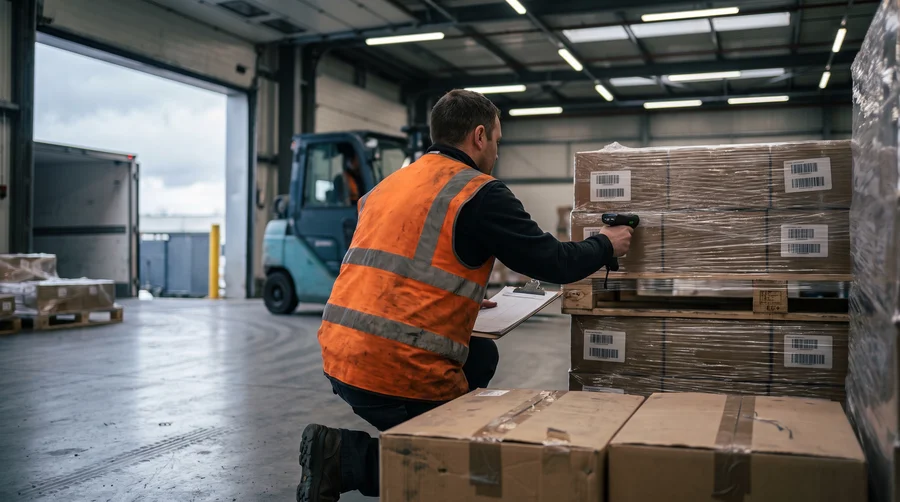
Urgent Air Freight Shipment on Weekends — Who Handles It for You?
Time-critical air freight shipment on the weekend? Aircargo.nl is available 24/7 from Aalsmeer near Schiphol. Request a quote immediately — even on Saturdays.
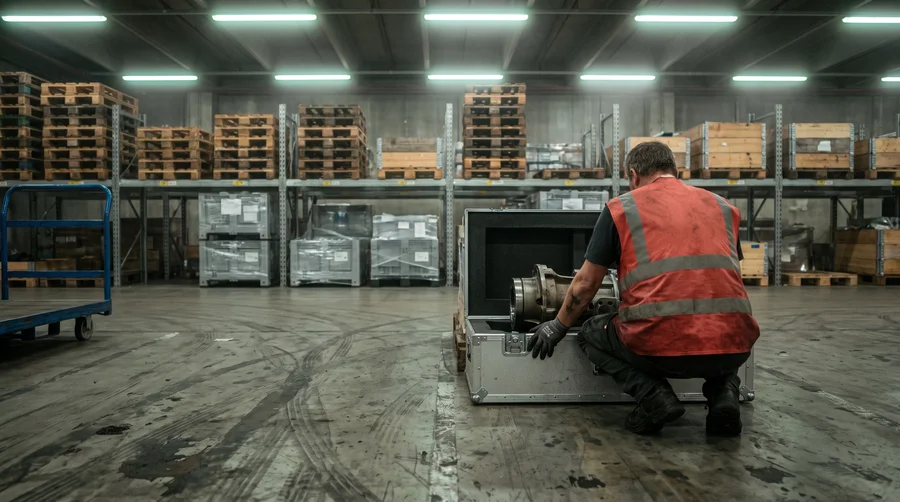
Aircraft on Ground — What to Do with Urgent Parts
Aircraft on ground? Learn step-by-step how AOG logistics works: NFO, charter, customs, and AEO. Aircargo.nl handles it 24/7 from Schiphol. Get in touch.
Air freight to the US within 24 hours — what's possible?
Air freight to the US within 24 hours from Schiphol: when is it feasible? Read about cut-offs, ISF filings, and AOG. Get advice from Aircargo.nl.
Air Freight from China to the Netherlands — Costs in 2024
What does air freight from China to the Netherlands cost in 2024? Rates from €3 to €9/kg, all additional fees explained. Request a quote at Aircargo.nl.
Best Air Freight Forwarders in the Netherlands
Compare the best air freight forwarders in the Netherlands. From Kuehne+Nagel to independent AEO-certified companies at Schiphol. Request a quote at Aircargo.nl.
How Do I Choose a Good Air Freight Forwarder?
How do you choose the best air freight forwarder? Learn which criteria really matter: AEO certification, independence, network, and transparency. Request a quote from Aircargo.nl.
Air Freight Rates Per Kg Netherlands 2024 — What You Really Pay
What does air freight cost per kg from the Netherlands in 2024? Discover rate ranges, chargeable weight, and surcharges. Request an all-in quote from Aircargo.nl.
Which Freight Forwarders Are at Schiphol?
Which freight forwarders are located at Schiphol? Check out the complete overview of major and smaller forwarders and discover how to choose the right one for your cargo.
Temperature-Sensitive Air Freight from Schiphol — How It Works
How does temperature-controlled air freight work through Schiphol? Read all about the cold chain, IATA classes, and AEO customs. Get advice from Aircargo.nl.
AOG Air Freight — What It Is and When You Need It
AOG air freight explained: what it is, how it works, and when you need it. Aircargo.nl handles your urgent shipments 24/7 via Schiphol. Request a quote now.
Best Air Freight Forwarder in the Netherlands — How to Choose Wisely
How do you choose the best air freight forwarder in the Netherlands? Read the criteria for AEO, network, and accessibility — and discover why Aircargo.nl is the right partner.
Compare the Best Air Freight Companies in the Netherlands
Compare the top air freight companies in the Netherlands by price, AEO certification, service, and specialization. Choose the right freight forwarder for your shipment — request a quote.
Request a Quote for Airfreight Small Package: Guide
Request an airfreight quote for your small package. Learn what information you need, how costs are calculated, and how Aircargo.nl assists you quickly.
Book Airfreight at Schiphol for Business — Fast and Hassle-Free
Booking airfreight via Schiphol for business? Aircargo.nl handles export, import, AOG, and customs — AEO certified, available 24/7. Request a quote now.
How Do I Calculate the Volumetric Weight for Air Freight?
Learn how to calculate volumetric weight for air freight using the IATA formula (L×W×H÷6000). Practical explanations, calculation examples, and tips. Request a quote from Aircargo.nl.