Aircraft on Ground — What to Do with Urgent Parts
Aircraft on ground? Learn step-by-step how AOG logistics works: NFO, charter, customs, and AEO. Aircargo.nl handles it 24/7 from Schiphol. Get in touch.
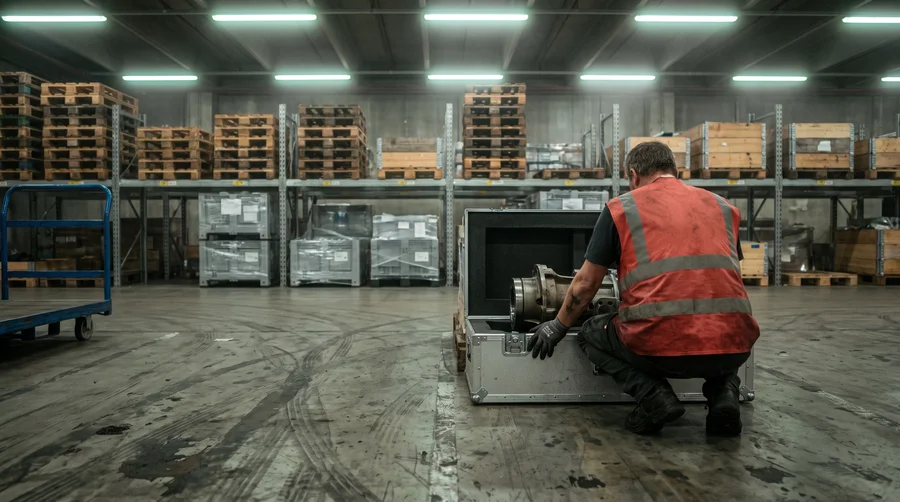
An aircraft is grounded and every hour costs money. Knowing what to do when an aircraft is grounded and urgently needs parts is essential knowledge for operators, MRO departments, and purchasers: in an AOG situation, there’s no time for detours. Below, you’ll read what to do immediately, how logistics work, and what to expect from a specialized forwarder.
An AOG Situation: Every Hour Counts
In an AOG situation (Aircraft on Ground), an aircraft remains grounded until a defective part is replaced. Costs escalate hourly due to canceled flights, passenger compensation, and reputational damage.
AOG stands for Aircraft on Ground: an aircraft that stays on the ground until a faulty part is replaced. Costs quickly mount up—because of canceled flights, replacement aircraft, passenger compensation, and reputational harm to the operator. A Boeing 737 grounded for a day can easily cost tens of thousands of euros, not to mention indirect consequences.
Every link in the chain must work flawlessly: from warehouse to airport, from customs to ground handler. One delay in documentation or one missed flight means another night on the ground.
This demands different logistics than a regular air cargo shipment. Different booking priorities, different customs procedures, and a different level of availability from the forwarder.
First Steps After an AOG Notification
Once an AOG notification comes in, three actions are immediately critical: identify the exact part, check export restrictions, and promptly engage a specialized forwarder.
Immediate action determines how quickly the aircraft gets back in the air. The first minutes shape the entire process.
Precisely Identify the Required Parts
Identify the part as accurately as possible: part number, serial number, dimensions, weight, and the corresponding HS code. An incorrect HS code delays customs clearance—and you can’t afford that hold-up. For example: a part is classified under the wrong HS code and is held for inspection upon arrival at Schiphol. This can take hours while the maintenance team waits.
Also record the exact origin of the part. Is it from your own warehouse, a supplier, or an AOG pool? The origin location partly determines which flight connections are available.
Check Export Restrictions and Permits
Aircraft parts sometimes fall under dual-use regulations or other export control regimes. Check before shipment whether an export license is required—this is especially true for parts with military applications or advanced technology.
Hazardous materials (DGR) require immediate attention. Hydraulic fluids, lithium batteries, or certain composite materials require specific DGR documentation. An error here blocks the shipment at the moment when every minute counts.
Engage an AOG Specialist Immediately
A specialized forwarder has contacts with airlines, ground handlers, and customs necessary to mobilize an AOG shipment. This isn’t a luxury but a necessity: without those connections, you lose precious hours to waiting and manual coordination.
Engage the forwarder as soon as the AOG notification arrives—not after you’ve spent an hour trying to find flights yourself. The earlier the specialist is on board, the higher the chance of a next-flight-out booking the same day.
How AOG Cargo Logistics Differ from Regular Air Freight
AOG shipments operate under a separate regime: higher priority on flights, stricter documentation requirements, and the possibility of charter options—all focused on minimizing aircraft downtime.
AOG shipments are treated differently. They are prioritized, booked, and documented differently than standard cargo.
Flight Priority vs. Standard Bookings
With regular air freight, you accept that a shipment may depart a day later due to overbooking. With AOG, that’s not an option. Airlines treat AOG shipments as top priority, giving them precedence over existing reservations—provided the forwarder has the right contacts and documentation is in order.
This requires direct communication with the airline’s cargo department or the handler at the airport. A forwarder with established relationships arranges this much faster than an operator calling themselves.
Next-Flight-Out and Charter Options
Next-flight-out (NFO) means the part is sent on the very next available flight, regardless of the regular schedule. For a small actuator or a set of brake pads, this works excellently: fast, affordable, and effective.
For large or heavy parts—a engine, landing gear, or wing component—a charter flight is sometimes the only solution. Charter offers the necessary cargo space and flexible timing but demands quick decision-making and close coordination with the charter company.
Documentation Under Time Pressure
Every air freight shipment requires an Air Waybill (AWB), a packing list, and a commercial invoice with the HS code. For AOG, this documentation must be prepared quickly and accurately. An incorrect AWB or a missing DGR declaration can stop the shipment at the moment the aircraft is waiting.
An experienced forwarder processes these documents parallel to the booking, so no delay occurs between flight confirmation and cargo release.
Customs and Compliance for Urgent Shipments
For urgent aircraft parts, customs clearance is the most critical link: AEO certification, temporary import via an ATA carnet, and 24/7 availability determine whether your shipment waits minutes or hours at the border.
Customs handling is one of the most critical steps in AOG shipments. The right certification and preparation make the difference between waiting minutes or hours.
AEO Certification Speeds Up Processing
AEO stands for Authorised Economic Operator: a certification that indicates a company is trustworthy and compliant in the international flow of goods. AEO-certified forwarders enjoy simplified customs procedures and faster clearance—a tangible advantage when a part arrives from Miami to Schiphol and must clear customs quickly.
Aircargo.nl is AEO certified. In practice, this means faster shipment releases and fewer chances of extra inspections that delay the AOG process.
Temporary Import and ATA Carnet
Aircraft parts returning to their country of origin after repair may qualify for temporary import via an ATA carnet. This customs document replaces a full customs declaration and prevents you from paying import duties on a part that ultimately leaves the country again.
For MRO companies and operators regularly handling international repairs, knowledge of the ATA carnet system is essential. A specialized forwarder arranges this as part of the AOG service.
What to Do When Importing Outside Office Hours
AOG situations don’t consider office hours. An aircraft grounded in the night between Saturday and Sunday requires the same speed as on a weekday— a part arriving at Schiphol overnight should not wait until Monday morning for clearance.
A forwarder with 24/7 availability can file customs declarations and coordinate with customs authorities outside regular hours. Without that availability, the part waits at the border until services resume—and the aircraft waits along with it.
Schiphol’s Role as an AOG Hub
Thanks to more than 120 direct cargo connections and a dense concentration of airlines and handlers, Schiphol is one of Europe’s most efficient AOG hubs for time-critical air cargo shipments.
Schiphol is one of Europe’s key cargo airports and a natural hub for AOG shipments. The combination of direct flight connections to over 120 destinations and a dense cluster of airlines, ground handlers, and forwarders makes Schiphol ideally suited for time-critical cargo.
Aircargo.nl is located in Aalsmeer, just next to Schiphol. This offers a practical advantage: short driving distances to cargo handling, direct contacts with handlers on the platform, and the ability to quickly step in if capacity frees up or a flight shifts. Think of a part released in the afternoon that must fly to Dubai the same evening.
Additionally, the Schiphol location makes it easier to consolidate or forward AOG parts via crosstrades—shipments where Schiphol serves as a transit point rather than a final destination. This opens extra routing options when a direct connection isn’t available. This routing flexibility is one reason why air cargo specialists prefer Schiphol over other European hubs for complex AOG routes.
What to Expect from an AOG Forwarder
An AOG forwarder delivers more than a flight number: expect one dedicated point of contact, real-time shipment tracking, and proactive communication with every delay in the chain.
A good AOG forwarder offers more than just a flight number. You should expect tangible services tailored to the urgency of your situation.
Personal Point of Contact, Not a Call Center
In an AOG, you don’t have time to explain your situation repeatedly to different employees. You deserve one dedicated contact who knows your file, knows your part, and acts immediately—someone who calls you back with a solution, not a ticket number.
Aircargo.nl is based on personal contact. No call center, no transfer to a generic help desk. You speak directly to the person handling your shipment.
Real-Time Visibility of Your Shipment
You want to know at all times where the part is: on the cargo floor, on the plane, or with customs at the destination. Precision tracking—also known as shipment visibility or shipment monitoring—isn’t an add-on but a basic requirement in AOG logistics.
This real-time visibility gives you the information you need to plan your own operation. When can the maintenance team be ready? When is the aircraft back in service?
Proactive Communication on Delays
Not every AOG shipment runs without complications. A flight can be delayed, customs may request additional information, or a connecting flight might be canceled. In such cases, you expect the forwarder to call you—proactively, with an alternative—not for you to chase down information yourself.
Aircargo.nl is independent of airlines and agents. When choosing routes, there’s no preference for a particular carrier: the fastest and most reliable route is selected based on the situation, not commercial interests.
Preventing AOG Shipments: What You Can Arrange in Advance
The impact of an AOG situation can be substantially reduced by pre-arranging agreements with a dedicated forwarder and strategically positioning critical spare parts near your operational airports.
Prevention is better than cure, even in aviation. Several practical preparations significantly reduce the impact of a future AOG situation.
Build a solid relationship with an AOG forwarder before you need one. Set agreements on response times, communication lines, and documentation requirements. When the AOG notification arrives, your forwarder already knows who you are, what fleet you operate, and what you need. This immediately saves you 15 minutes of explanation at the worst possible time.
Also consider maintaining a limited stock of critical spare parts (critical spares) at strategic locations near the airports where your fleet operates most frequently. This noticeably shortens the logistics chain in an AOG event. The combination of preparation and a reliable forwarder makes the difference between hours of AOG and days of AOG.
Aircargo.nl — AOG and Time-Critical Shipments Without Turbulence
Aircargo.nl handles AOG and time-critical shipments to and from Schiphol, active since 2006 and AEO certified. With over 120 global destinations, 24/7 availability, and a personal approach, you know you have a forwarder who understands what needs to happen when an aircraft is grounded and urgent parts are needed—and who acts immediately without detours.
Whether it’s an NFO booking for a small part, a charter for an engine, or a complex customs route with an ATA carnet—you have one contact who manages full coordination. No transfers, no waiting, no uncertainty about your shipment's status.
Contact Aircargo.nl as soon as an AOG situation arises—or better yet, establish agreements today for when it does. You can reach us 24/7 via our contact page or directly by phone.
Frequently Asked Questions
What does AOG mean in aviation?
AOG stands for Aircraft on Ground and refers to an aircraft that cannot fly because a defective part must be replaced before the aircraft can return to the sky. As long as the required part hasn’t been delivered and installed, the aircraft remains grounded—with all the operational and financial consequences involved.
How quickly can an AOG shipment be arranged?
A specialized forwarder can handle a next-flight-out booking within a few hours, depending on part availability and flight connections to the destination. Speed depends heavily on how quickly documentation is complete and whether capacity is available on the next flight. The sooner the forwarder is engaged, the higher the chance of same-day shipment.
What documents are required for shipping aircraft parts?
For an AOG shipment, you need at least the following documents: an Air Waybill (AWB), a detailed packing list, a commercial invoice with the correct HS code, and if applicable, an export license. If the part contains or qualifies as hazardous materials, a DGR declaration (Dangerous Goods Regulation) is also required. An experienced forwarder prepares these documents in parallel with the flight booking.
Can an aircraft part be temporarily imported without full customs clearance?
Yes, via an ATA carnet, an international customs document that allows temporary import without paying import duties. This is common for aircraft parts that return to their country of origin after repair. The ATA carnet replaces the regular customs declaration and speeds up processing at the border.
What’s the difference between next-flight-out and a charter flight for AOG parts?
Next-flight-out (NFO) means placing the part on the next available scheduled cargo flight. This is the usual method for small and light parts. A charter flight is used when the part is too large or too heavy for available cargo space on regular flights—think of an aircraft engine or landing gear—or when no suitable regular flight is available within the required timeframe.
Why is an independent forwarder better for AOG shipments than booking directly with an airline?
An independent forwarder has access to multiple airlines and handlers simultaneously and objectively chooses the fastest available route without commercial bias toward any one carrier. When booking directly with an airline, you’re limited to that airline’s network and availability. Especially in AOG—where every connection counts—that independence provides a tangible advantage in speed and flexibility.
More news
Other recent posts from our team.
Freight Forwarder or Courier for Air Cargo — What's the Difference?
Choosing between a courier or air freight forwarder? Discover the 5 key differences and when Aircargo.nl is the better choice. Request free advice.

Air Freight Shipment Delayed — What Do You Do Now?
Air freight shipment delayed? Discover the causes, first steps, and your rights. Aircargo.nl assists you 24/7 with proactive solutions from Schiphol.

How Much Does It Cost to Ship Air Freight from the Netherlands?
What do you pay for air freight from the Netherlands? Discover rates per kg, surcharges, and cost factors. Request a transparent quote at Aircargo.nl.
What documents do I need for air freight export?
Which documents are required for air freight export from the Netherlands? AWB, commercial invoice, EX-1, and more. Aircargo.nl guides you from A to Z. Contact us.

Urgent Air Freight Shipment on Weekends — Who Handles It for You?
Time-critical air freight shipment on the weekend? Aircargo.nl is available 24/7 from Aalsmeer near Schiphol. Request a quote immediately — even on Saturdays.
Air freight to the US within 24 hours — what's possible?
Air freight to the US within 24 hours from Schiphol: when is it feasible? Read about cut-offs, ISF filings, and AOG. Get advice from Aircargo.nl.
Air Freight from China to the Netherlands — Costs in 2024
What does air freight from China to the Netherlands cost in 2024? Rates from €3 to €9/kg, all additional fees explained. Request a quote at Aircargo.nl.
Best Air Freight Forwarders in the Netherlands
Compare the best air freight forwarders in the Netherlands. From Kuehne+Nagel to independent AEO-certified companies at Schiphol. Request a quote at Aircargo.nl.
How Do I Choose a Good Air Freight Forwarder?
How do you choose the best air freight forwarder? Learn which criteria really matter: AEO certification, independence, network, and transparency. Request a quote from Aircargo.nl.
Air Freight Rates Per Kg Netherlands 2024 — What You Really Pay
What does air freight cost per kg from the Netherlands in 2024? Discover rate ranges, chargeable weight, and surcharges. Request an all-in quote from Aircargo.nl.
Which Freight Forwarders Are at Schiphol?
Which freight forwarders are located at Schiphol? Check out the complete overview of major and smaller forwarders and discover how to choose the right one for your cargo.
Temperature-Sensitive Air Freight from Schiphol — How It Works
How does temperature-controlled air freight work through Schiphol? Read all about the cold chain, IATA classes, and AEO customs. Get advice from Aircargo.nl.
AOG Air Freight — What It Is and When You Need It
AOG air freight explained: what it is, how it works, and when you need it. Aircargo.nl handles your urgent shipments 24/7 via Schiphol. Request a quote now.
Best Air Freight Forwarder in the Netherlands — How to Choose Wisely
How do you choose the best air freight forwarder in the Netherlands? Read the criteria for AEO, network, and accessibility — and discover why Aircargo.nl is the right partner.
Compare the Best Air Freight Companies in the Netherlands
Compare the top air freight companies in the Netherlands by price, AEO certification, service, and specialization. Choose the right freight forwarder for your shipment — request a quote.
Request a Quote for Airfreight Small Package: Guide
Request an airfreight quote for your small package. Learn what information you need, how costs are calculated, and how Aircargo.nl assists you quickly.
How Airfreight Shipping Works from the Netherlands
Airfreight from the Netherlands: clear explanation of steps, documents, customs, and costs. Request a customized quote at Aircargo.nl in Aalsmeer.
Book Airfreight at Schiphol for Business — Fast and Hassle-Free
Booking airfreight via Schiphol for business? Aircargo.nl handles export, import, AOG, and customs — AEO certified, available 24/7. Request a quote now.
How Do I Calculate the Volumetric Weight for Air Freight?
Learn how to calculate volumetric weight for air freight using the IATA formula (L×W×H÷6000). Practical explanations, calculation examples, and tips. Request a quote from Aircargo.nl.